
The Professional Mowing Landscape Is Changing
Professional landscaping and vegetation management are changing. Across Europe and North America, contractors, grounds maintenance teams, agricultural operators, property managers, and land‑maintenance professionals are dealing with increasingly demanding working environments.
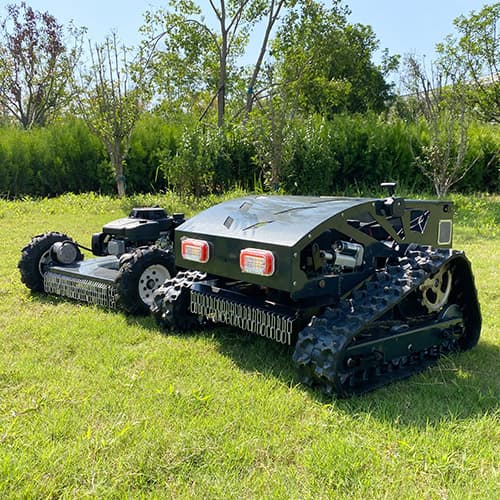
Large open lawns are still common, yet many commercial assignments involve steep slopes, uneven ground, roadside vegetation, drainage zones, orchards, industrial sites and rough grassland. In these scenarios, equipment selection goes far beyond raw cutting output, pushing many crews toward tracked remote control mower solutions for complex field work.
A remote‑controlled mower delivers a fresh approach for tough mowing assignments. Instead of riding on the unit or walking closely behind, operators steer the machine remotely while retaining unobstructed sightlines over the jobsite. This blend of terrain adaptability, safe operator positioning and real‑world productivity makes RC mowers a compelling option for modern‑day land‑management teams.
Traditional Mowing Equipment and Its Limitations
Professional mowing fleets historically rely on walk‑behind mowers, zero‑turn units, ride‑on mowers and tractors fitted with mowing attachments. These machines remain highly efficient for level, easily‑accessible turf areas.
Even so, plenty of real‑world sites do not offer flat, easy‑to‑reach ground. Landscaping firms maintain commercial sites with steep embankments; roadside‑maintenance crews tackle vegetation alongside drainage ditches; farm operators need to manage grass between fruit trees and uneven farmland.
A machine may boast strong cutting horsepower, yet if terrain makes on‑site operator positioning uncomfortable or risky, teams have to look for alternative hardware. This gap creates the perfect use‑case for remote‑controlled lawn mowers, including compact models like the mini tank mower for constrained working spaces.
What Professionals Actually Need From a Mower
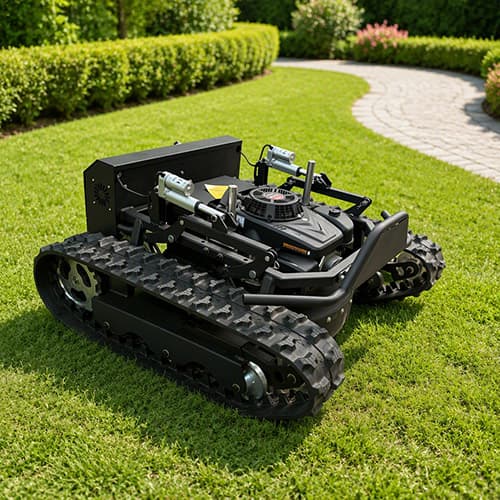
Commercial‑grade mowing hardware must perform reliably under real‑world field stress. For business buyers, purchasing decisions are rarely driven purely by horsepower or cutting‑deck width. The machine has to integrate seamlessly into existing daily workflows.
Key evaluation criteria for professional buyers:
Terrain and slope conditions
Grass and vegetation type
Traction and maneuverability
Cutting width and adjustable working height
Remote‑controller responsiveness and range
Operator line‑of‑sight visibility
Machine footprint and overall dimensions
Inter‑site transport practicality
Simplicity of routine maintenance
Spare‑parts availability
Timely technical support
Long‑term total‑cost‑of‑ownership requirements
That explains why experienced professionals evaluate the complete application scenario, rather than fixating on one isolated spec value. Remote‑control mowing hardware shines when projects demand both solid cutting performance plus access to hard‑to‑navigate terrain.
The Difference Remote Operation Makes
The fundamental distinction between conventional mowers and RC units lies in the dynamic between human operator and equipment. Traditional hardware requires operators to ride onboard or walk in immediate proximity to the mowing deck. With remote‑control equipment, crew members can stand on stable ground and steer travel plus cutting functions from a safe distance.
This operating setup delivers tangible value for working scenarios such as:
Steep grass slopes
Highly uneven terrain
Thick, rough vegetation
Roadside verges
Drainage‑channel embankments
Large grass embankments
Hard‑to‑reach properties
Operators can select stable observation points while keeping full visual oversight of ongoing mowing work. Important note: remote‑control functionality does not erase all jobsite hazards. Proper training, thorough site inspection, consistent visibility checks and adherence to official operating protocols remain mandatory for safe field operations. Remote‑control technology simply gives professional crews an additional toolset for tackling tricky vegetation‑maintenance assignments.
Where Remote Control Mowers Fit Best
Remote‑control lawn mowers are not designed to replace every single unit inside a professional equipment fleet. Instead, they deliver maximum ROI for targeted use‑cases where traditional mowing solutions struggle to perform.
Steep Slopes and Embankments
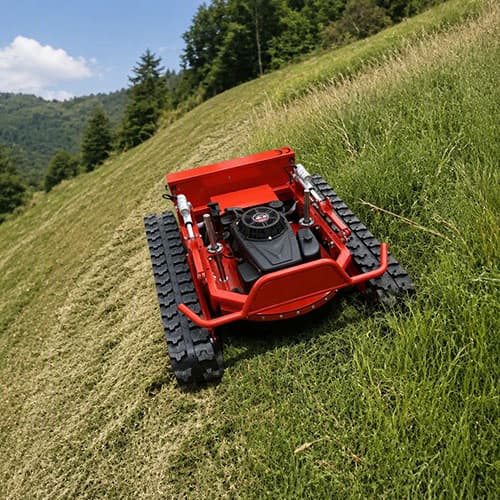
Sloped grassy banks create major headaches for conventional mowing gear. RC mowers let operators supervise mowing activity from safe ground away from the hazardous incline surface.
Roadside Vegetation
Road‑adjacent vegetation maintenance calls for careful positional awareness. Remote‑operation grants crews extra flexibility managing verges alongside public roads and civil infrastructure.
Agricultural Land
Farm and contracting teams regularly encounter rough grass, bumpy ground and orchard rows where walk‑behind or ride‑on machinery lacks adequate maneuverability.
Industrial and Commercial Properties
Industrial compounds, warehouse sites and commercial estates frequently contain neglected grass zones, slopes, drainage areas and rank overgrown vegetation.
Estates and Large Grounds
Property managers overseeing large estates require diversified hardware for varied site zones; remote‑control mowers serve as specialized equipment for the trickiest sections of the grounds.
Overgrown Vegetation
When sites feature dense, hard‑to‑access overgrowth, remote‑controlled machinery opens up extra options for comprehensive professional vegetation management.
Remote Control Mower vs Conventional Mowing Equipment
Each mowing platform carries distinct strengths; optimal selection always hinges on real‑world jobsite conditions.
| Equipment Type | Typical Environment | Operator Position | Common Strength |
|---|---|---|---|
| Walk‑Behind Mower | Flat and accessible lawns | Behind the machine | Simple operation for routine mowing |
| Ride‑On Mower | Large, open areas | On the machine | Efficient coverage of accessible ground |
| Remote Control Mower | Slopes and difficult terrain | Away from the machine | Flexible operation in challenging conditions |
For most professional contracting businesses, the goal is not total replacement of legacy hardware. The smarter strategy is deploying the correct tool for each individual assignment: walk‑behind units handle fine‑detail turf work, ride‑on mowers process expansive open lawns, and remote‑control units tackle slopes plus rough, hard‑to‑navigate ground. This mixed‑fleet strategy unlocks far greater operational versatility. You can explore our full RC mower lineup to build out your equipment inventory.
Why Safety Is Part of the Buying Decision
Safety considerations take top priority whenever crews run professional‑grade mowing machinery across tricky terrain. Slopes, bumpy surfaces, scattered obstacles, roadside exposure and unstable ground all introduce extra operational risks.
Remote‑control hardware shifts operator positioning away from hazardous zones, yet it never substitutes for complete safety protocols. Pre‑operation checks should cover:
Overall jobsite conditions
Slope geometry and surface traits
Continuous line‑of‑sight visibility
Hidden and visible field obstacles
Pedestrian and passing‑vehicle activity
Defined safe working distances
Pre‑use machine condition inspection
Formal operator competency training
Documented on‑site emergency workflows
All field work must strictly observe manufacturer documentation alongside company‑specific site safety rules.
Productivity Is About More Than Cutting Speed
When businesses compare commercial mowing equipment, productivity is frequently reduced to cutting width or forward travel speed. While those specifications carry weight, real‑world professional productivity extends well beyond those two metrics.
Hardware generates tangible business value by opening access to previously‑difficult sites, lowering physical operator fatigue, or enabling teams to accept assignments that otherwise would demand expensive alternative solutions. Take steep embankments as an example: conventional mowers may deliver sufficient cutting power, yet the core challenge lies in safe operator positioning. Remote‑control mowing fundamentally reshapes this dynamic, letting operators maintain favorable viewing positions and expanding project options for landscaping contractors.
The Equipment Choice Depends on the Job
No single universal mowing machine can excel for every professional application. Expansive well‑kept commercial lawns suit ride‑on mowers; compact manicured grounds perform best with walk‑behind equipment; steep embankments and rough grassland call for remote‑control mowing platforms such as the robot crawler lawn mower.
Buyers ought to start evaluation from real‑world job requirements, asking practical questions:
What terrain types do our crews encounter regularly?
What varieties of vegetation need routine management?
Where must operators stand or sit during field operations?
How frequently will equipment be transported between work sites?
What maintenance and technical support resources will we require?
These guiding questions help businesses judge whether remote‑control mowing aligns with their day‑to‑day operational demands.
A Practical Buyer Checklist
Professional purchasers should go through these evaluation points before finalizing a remote‑control lawn‑mower buying decision.
Terrain: Assess slopes, uneven ground, soft surfaces, obstacles and real‑site access constraints.
Vegetation: Confirm whether the unit will handle manicured turf, tall grass, weeds, brush or mixed‑type overgrowth.
Cutting Requirements: Analyze needed cutting width, height adjustment range, travel speed and post‑cut finish expectations.
Remote Control System: Evaluate joystick responsiveness, effective operating range and operator field visibility.
Traction: Prioritize reliable grip for inclines and irregular ground matching your typical jobsites.
Transport: Review machine dimensions, loading/unloading workflow and inter‑site hauling logistics for multi‑site contracting work.
Maintenance: Verify ease‑of‑access for inspection, cleaning, servicing and component replacement.
Technical Support: Confirm spare‑parts supply channels and accessible after‑sales assistance for business‑critical equipment.
Operator Training: Guarantee staff fully understand machine functions, remote controls, site rules and emergency response workflows.
Long‑Term Value: Estimate how well this mower integrates with your existing fleet and expands your range of serviceable jobs.
Why KOIVI Is Attracting Professional Attention
KOIVI specializes in remote‑control mowing hardware engineered for professional‑grade, high‑demand outdoor working environments. True RC mower design goes far beyond simply retrofitting a wireless transmitter onto a standard mower body. Every subsystem including chassis, traction assembly, cutting deck, wireless controls and service‑friendliness has to work in seamless harmony.
For contracting and land‑management companies seeking to expand capabilities on difficult terrain, KOIVI delivers a purpose‑built equipment alternative. Our machines are meant to become a valuable segment of a diversified mixed fleet, rather than replacing every existing mower model. If you would like to talk through your fleet‑expansion and machine‑selection needs with our product specialists, you can get connected via WhatsApp.
Remote Control Mowers as Part of a Modern Professional Fleet
The future landscape of professional mowing will not hinge exclusively on one single machine category. Progressive businesses assemble mixed‑equipment fleets purpose‑matched to distinct job‑site profiles.
Walk‑behind mower: Precision lawn care and compact work zones
Ride‑on mower: Large‑scale open‑area grass maintenance
Remote control mower: Slopes, rough ground, embankments and hard‑to‑access vegetation zones
This tool‑for‑the‑job philosophy gives contractors greater flexibility serving a diversified customer base. Instead of forcing one piece of hardware to cope with every imaginable jobsite condition, teams leverage specialized equipment for each assignment.
Frequently Asked Questions
1. Why are professionals choosing remote control lawn mowers?
Professionals are increasingly considering remote control mowers because they provide a different way to manage slopes, rough terrain, roadside vegetation, and other difficult‑access areas.
2. Are remote control mowers only designed for steep slopes?
No. They can also be used in agricultural environments, orchards, industrial properties, large estates, commercial grounds, roadside areas, and rough vegetation management.
3. Can a remote control mower replace a ride‑on mower?
Not necessarily. Ride‑on and remote control mowers are designed around different operating conditions. A ride‑on mower can be highly effective on large, accessible areas, while a remote control mower can provide additional flexibility on difficult terrain.
4. Does remote operation automatically make mowing safer?
No. Remote operation can allow the operator to work away from the machine, but safe operation still requires proper training, site assessment, visibility, machine inspection, and appropriate operating procedures.
5. What should I consider before buying a professional remote control mower?
Consider terrain, vegetation, cutting requirements, traction, remote control performance, transport, maintenance, spare parts, technical support, and operator training.
6. Are remote control lawn mowers suitable for commercial landscaping?
They can be suitable for a range of commercial landscaping and vegetation management applications, particularly where difficult terrain or restricted access makes conventional mowing less convenient.
7. Why are professional companies adding remote control mowers to their fleets?
A remote control mower can provide a specialized solution for jobs that are difficult to handle with conventional equipment. It can complement existing walk‑behind and ride‑on machines rather than necessarily replacing them.
A Practical Shift in Professional Mowing
The growing interest in remote control lawn mowers reflects a broader change in professional landscaping and vegetation management. Modern contractors demand equipment capable of adapting to diverse real‑world jobsites. Flat lawns represent only a segment of total workload; slopes, rough grass, embankments, farmland, infrastructure zones and hard‑to‑reach sites all call for specialized solutions.
For professional users, the full value of remote‑control mowing stems from the combination of remote operation, terrain‑adapted performance, flexible operator positioning, real‑world productivity and mixed‑fleet compatibility. As landscaping and land‑management businesses keep seeking more versatile machinery, RC mowing solutions grow more relevant for tough assignments.
For businesses evaluating new professional‑grade mowing equipment, the critical first step is analyzing actual jobsite conditions and selecting hardware purpose‑built to match those requirements.
KOIVI Remote Control Lawn Mowers — Built for professional mowing in challenging environments.