
A Different Way to Operate a Mower
A remote control lawn mower may look similar to other professional mowing machines, but the way it is operated is very different. Instead of walking directly behind the mower and controlling it through a handle, the operator uses a remote controller to send commands to the machine. The mower receives those commands through a wireless control system and converts them into movement, cutting, and speed adjustments.
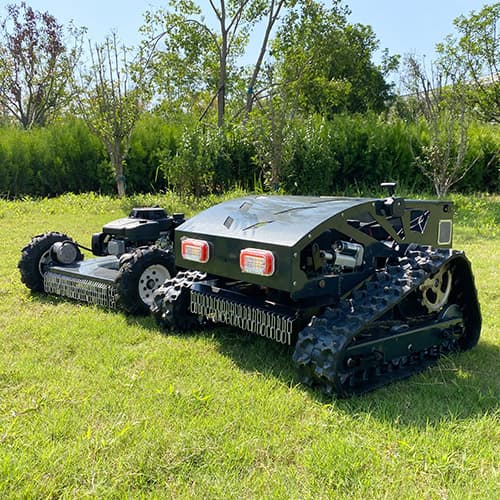
A professional tracked remote control mower combines several systems that have to work together: the power system, drive system, cutting system, electronic controls, remote controller, safety functions, and machine chassis. Understanding how these parts work together makes it easier to see why remote control mowing equipment is becoming useful for professional landscaping, agriculture, vegetation management, and difficult‑terrain maintenance.
Start With the Remote Controller
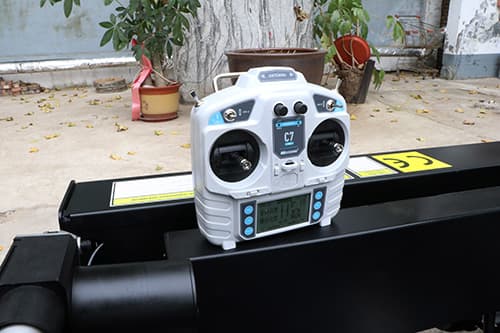
The most visible difference between a conventional mower and a remote control mower is the operator interface. The operator holds a dedicated remote controller and uses its controls to direct the machine. Depending on the mower, the controller can manage functions such as forward and reverse movement, steering, travel speed, and cutting operation.
The operator does not need to remain physically attached to the mower. Instead, the operator can choose a suitable observation position and maintain visual contact with the machine while sending commands. For professional users, this can be especially useful on slopes, rough ground, large properties, embankments, and areas where following directly behind a conventional mower would be inconvenient. Compact units such as mini tank mower also adopt this wireless operating principle for small‑scale tough‑terrain assignments.
What Happens When You Move the Control Stick?
When the operator moves a control on the remote controller, the command is transmitted wirelessly to the mower. Inside the machine, electronic control components receive and interpret the signal. The system then sends the appropriate instructions to the drive and other controlled functions.
For example, a forward command can cause the drive system to move the mower forward. A steering command can change the relative movement of the drive components on each side of the machine. A cutting command can activate the mowing system.
The remote controller does not physically move the machine. It sends instructions, while the mower's onboard systems perform the required actions. This separation between operator and machine is the foundation of remote controlled mowing.
The Main Systems Inside a Remote Control Lawn Mower
Although manufacturers use different engineering solutions, most professional remote control mowers can be understood as a combination of several major systems.
Key core systems:
Power system supplies energy to the drive and cutting components
Drive system converts that available power into controlled movement
Cutting system processes grass and vegetation
Control system receives remote commands and coordinates machine functions
Remote control system creates the wireless connection between the operator and mower
Chassis, undercarriage and safety‑protection modules support components and protect hardware
The performance of the complete mower depends on how effectively these systems work together, rather than on one component alone.
How the Mower Moves Across the Ground
Movement is one of the most important parts of a remote control lawn mower. Professional machines may use wheels or tracks depending on their design and intended application. Tracked systems can provide a large contact area with the ground and can be useful for challenging terrain, while wheel‑based designs can be appropriate for other operating conditions.
Steering can be achieved by controlling the movement of the drive system. On some machines, the left and right sides can be controlled independently, allowing the mower to change direction efficiently. This type of control can be useful when working around trees, structures, property boundaries, or irregular terrain.
The exact drive technology varies between models, which is why buyers should evaluate the mower according to the terrain and vegetation it will actually encounter.
How the Cutting System Works
The cutting system is where the mower performs its primary job: reducing grass and vegetation to the required height. When the operator activates the cutting function, the machine's power system supplies energy to the cutting mechanism. The blades rotate at the required operating speed, allowing the mower to process vegetation as it travels.
Cutting performance depends on more than blade speed. Cutting width, deck design, vegetation density, grass height, machine travel speed, and available power all influence productivity.
For professional users, the cutting system should be matched to the application. A mower intended for regularly maintained grass may have different requirements from a machine used for tall grass, weeds, or rough vegetation.
A remote control mower is therefore not simply a vehicle with blades. The cutting system and drive system need to work together to maintain consistent performance.
Why Tracks, Weight, and Chassis Design Matter
The mechanical design of the mower influences how effectively it can work in real outdoor conditions. A low and stable machine design can be valuable when operating on uneven ground. Track or wheel selection affects ground contact and traction. Weight distribution can influence machine behavior when travelling across irregular surfaces.
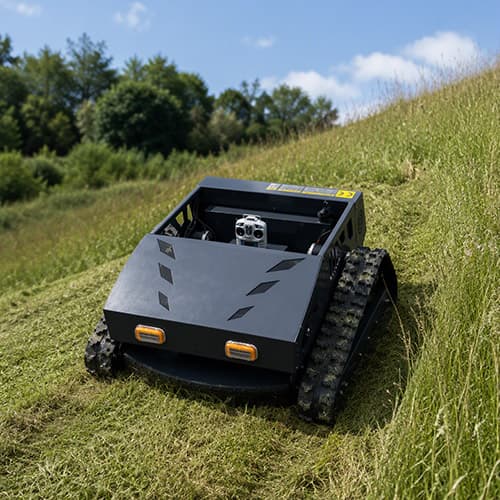
These characteristics become particularly important when mowing slopes or rough terrain. This is also why a professional remote control mower cannot be evaluated only by engine power. Power needs to be converted into controlled movement and cutting performance while the chassis maintains a suitable relationship with the ground. The best equipment design is application‑focused.
The Wireless Connection Is Only One Part of the System
People often assume that the remote control itself is the main technology behind a remote mower. In reality, the wireless connection is only one part of a larger control architecture.
The controller sends commands. The receiver accepts them. Electronic control components interpret those commands. Motors, actuators, or other mechanical systems then carry out the requested action.
A professional system also needs to manage communication reliability and machine response according to its design. For operators, the practical result is simple: controls should feel predictable and responsive, allowing the machine to follow intended commands without unnecessary complexity. The operator still needs to maintain visual awareness of the machine and follow the manufacturer's operating procedures.
What Happens If the Operator Releases the Controls?
A professional remote control mower is designed with operating and safety procedures that define how the machine responds to control inputs and interruptions. Depending on the specific model, the system may include emergency‑stop functions, communication monitoring, controlled stopping, and other protective features.
These functions are important because remote operation introduces a physical distance between the operator and machine. However, safety cannot be reduced to one automatic function. Operators still need to understand the machine, inspect the working area, maintain visibility, follow operating limits, and use the equipment according to the manufacturer's instructions. Technology supports safe operation; it does not replace responsible operation.
From Start‑Up to Finished Mowing
A typical mowing operation can be understood as a sequence.
First, the operator inspects the working area and confirms that the machine is suitable for the conditions.
Next, the mower is positioned at the starting point and the remote controller is prepared according to the operating instructions.
The operator then starts the machine's relevant systems and begins moving through the working area.
During mowing, the operator continuously adjusts travel direction and speed while controlling the cutting function. The machine processes vegetation as it moves.
After completing the area, the operator stops the cutting system and mower according to the recommended procedure, then carries out any required inspection or maintenance.
This workflow is straightforward, but professional performance depends on matching the machine to the site and using it correctly.
Where Remote Operation Makes the Biggest Difference
The biggest practical advantage of remote operation is the ability to change where the operator stands. On a conventional mower, the operator typically follows the machine. With remote control equipment, the operator can position themselves at a suitable observation point.
This can be valuable on:
Steep grass slopes
Roadside embankments
Rough agricultural land
Orchards and plantations
Large commercial properties
Areas with dense vegetation
Construction and development sites
Difficult‑to‑access grounds
Remote operation can also make it easier to observe the mower from a different angle and manage its movement around obstacles. The exact benefit depends on the terrain, machine design, operator experience, and application.
Remote Control Mower vs. Conventional Mower
The fundamental difference is not simply the presence of a remote controller. It is the relationship between the operator, machine, and working environment.
A conventional walk‑behind mower is designed around close physical operation. A remote control lawn mower separates the operator from the machine and transfers machine commands through a control system. That difference can change how professional teams approach certain jobs.
However, remote control does not mean that a machine is suitable for every property. Conventional equipment can remain practical for many flat, accessible, regularly maintained lawns. Remote controlled equipment becomes particularly relevant when terrain, vegetation, operator position, or site access creates additional challenges. You can view our full RC mower lineup to compare different equipment options.
Choosing a Remote Control Lawn Mower
Understanding how the technology works also helps when comparing machines. Start with the job rather than the brochure.
Consider these key factors:
The terrain, slope conditions
Vegetation type and density
Required cutting width
Total working area
Transport requirements
Maintenance access
Frequency of use
For professional landscaping companies, productivity may be important. For agricultural users, terrain capability and durability may receive more attention. For vegetation‑management teams, remote operation and cutting performance may be central requirements. The right machine is the one whose complete system matches the application. For mixed‑terrain contracting scenarios, many buyers also evaluate robot crawler lawn mower solutions.
Where KOIVI Fits Into the Technology
KOIVI develops remote control lawn mowers for professional outdoor applications where conventional mowing methods may not provide enough flexibility. The focus is not simply on adding wireless controls to a mower. A useful remote control mower needs a coordinated combination of drive performance, cutting capability, machine stability, operator control, durability, and practical maintenance.
For professional customers, this means looking at the complete machine rather than focusing on one headline specification. Whether the job involves slopes, rough vegetation, agricultural land, commercial grounds, or other demanding environments, equipment selection should begin with the conditions of the site. If you would like to discuss technical requirements and model selection with our product team, you can get connected via WhatsApp.
Frequently Asked Questions
1. How does a remote control lawn mower receive commands?
The operator sends commands through a wireless remote controller. A receiver and electronic control system on the mower interpret those commands and direct the relevant machine functions.
2. Does the operator have to walk behind the mower?
No. The operator can control the mower remotely from a suitable observation position while maintaining visual awareness of the machine.
3. How does a remote control mower steer?
Depending on the design, steering can be achieved by controlling the movement of the drive system, including the relative movement of the left and right sides.
4. Can remote control mowers cut tall grass?
Professional models can be designed for demanding vegetation, but the correct machine depends on grass height, density, cutting system, available power, and terrain.
5. Are remote control mowers suitable for slopes?
Some are specifically designed for challenging terrain. Suitability depends on the mower's specifications, operating limits, surface conditions, and the slope being maintained.
6. Is remote control enough to make mowing safe?
No. Remote operation can change the operator's position, but safe mowing still requires site assessment, proper training, visual awareness, maintenance, and compliance with the manufacturer's operating instructions.
How the Main Components Work Together
| Component | Main Function | Role in the Mowing Process |
|---|---|---|
| Remote controller | Sends commands | Lets the operator direct the mower from a distance. |
| Wireless receiver | Receives signals | Transfers commands into the machine's control system. |
| Control system | Interprets commands | Coordinates movement and controlled functions. |
| Drive system | Moves and steers | Provides traction, movement, and maneuverability. |
| Cutting system | Cuts vegetation | Processes grass and other vegetation. |
| Chassis / undercarriage | Supports the machine | Influences stability, durability, and ground interaction. |
The Technology Behind a Simple Idea
A remote control lawn mower starts with a simple concept: let the operator control the machine from a distance. Behind that simple idea is a coordinated system of wireless communication, electronic control, power delivery, drive components, cutting equipment, and mechanical design.
When these systems work together, the result is a machine that can be controlled without requiring the operator to remain directly behind it. That is why remote control mowing is becoming an increasingly interesting solution for professional users working with slopes, rough vegetation, large grounds, and difficult access.
For KOIVI, the objective is to turn this technology into practical equipment for real working conditions. Understand the terrain. Understand the vegetation. Understand how the machine works. Then choose the remote control mower that fits the job.