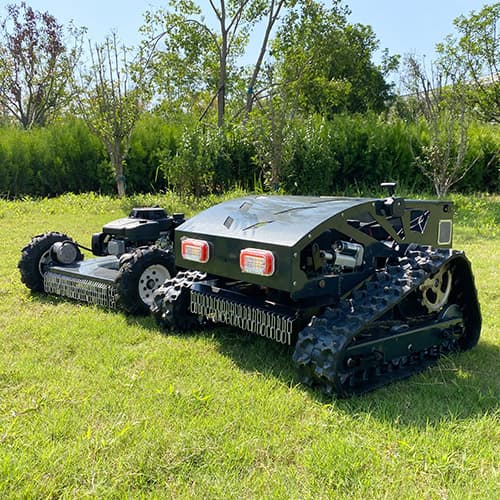

1. Understand the Terrain You Need to Maintain
Choosing the right remote control lawn mower is a critical investment for professional landscapers, agricultural operators, grounds‑maintenance contractors and property managers. Well‑selected equipment simplifies tough mowing assignments, improves workflow flexibility and expands the range of sites your business can service. However, models are built for distinct use‑cases. Some excel on steep inclines, while others are optimized for rough vegetation, farmland, roadside verges or commercial estates. Comparing units purely by price, horsepower or cutting‑deck width often leads to poor purchasing decisions. Key evaluation should cover terrain adaptability, traction, remote‑controller performance, serviceability, logistics and long‑term total‑cost‑of‑ownership. If you plan to invest in tracked remote control mower hardware, these seven core factors will guide you toward equipment matching your real‑world jobsite demands.
Before diving into spec sheets, map out your typical working terrain. A unit tuned for flat commercial turf may deliver unsatisfactory performance on steep embankments or bumpy farm ground. Common professional working scenarios include:
Steep grass slopes and embankments
Roadside vegetation and drainage channels
Orchards and plantations
Rough agricultural land
Industrial and commercial properties
Large estates and public grounds
Overgrown grass and vegetation
Uneven land around construction sites
Each scenario creates unique operational challenges. Mowing wide flat lawns prioritizes coverage speed and cutting consistency; slope assignments demand reliable traction, chassis stability, nimble maneuvering and strict adherence to manufacturer‑published operating limits. When assessing a machine, analyse ground surface, slope gradient, obstacles, soil moisture and site access routes.
Never base purchasing decisions only on the advertised maximum slope rating. Always cross‑reference this figure against surface conditions, travel direction, machine configuration and official operating instructions. Wet grass, loose topsoil and bumpy ground will downgrade real‑world incline performance. For commercial buyers, thorough jobsite assessment forms the foundation of sensible equipment investment. Compact options such as the mini tank mower are worth evaluating for smaller‑scale slope assignments with constrained access.
2. Check Cutting Performance and Vegetation Compatibility
Cutting capability ranks among your core evaluation criteria, because different sites call for different mowing results. Manicured commercial turf requires even, clean finishing; farm locations frequently handle tall grass, weeds and mixed rank growth. Clarify what vegetation types your crews encounter most frequently before finalizing model selection.
Grass and Light Vegetation
For regularly maintained turf, focus on cutting uniformity, effective working width and adjustable cutting‑height range.
Long Grass and Rough Vegetation
Overgrown sites demand robust cutting‑deck geometry plus sufficient power reserves for heavy plant material. Real‑world output depends on vegetation density, moisture content, cutting height and field operating conditions.
Mixed Terrain and Vegetation
Many contractors manage diverse property portfolios. Under these circumstances, machine versatility outweighs hyper‑specialized optimization for only one type of growth.
Cutting width also requires careful trade‑off analysis. Wider decks boost area‑coverage per pass, yet practical gains are limited by terrain complexity, maneuvering room and vegetation density. More compact machines navigate tight spaces, tree rows and obstacle‑cluttered zones; broader decks shine on open unobstructed ground when field conditions permit.
| Buying Factor | What to Evaluate | Why It Matters |
|---|---|---|
| Cutting width | Width relative to the working area | Influences coverage and maneuverability |
| Cutting height | Available adjustment range | Helps match different grass conditions |
| Cutting system | Suitability for grass and vegetation | Affects the types of jobs the mower can handle |
| Power | Performance under realistic workloads | Influences cutting capability |
| Working speed | Speed under actual site conditions | Helps estimate practical productivity |
The optimal option is not always the model boasting maximum deck width or peak horsepower. Prioritize consistent real‑world performance against your most frequently‑encountered vegetation and terrain profiles.
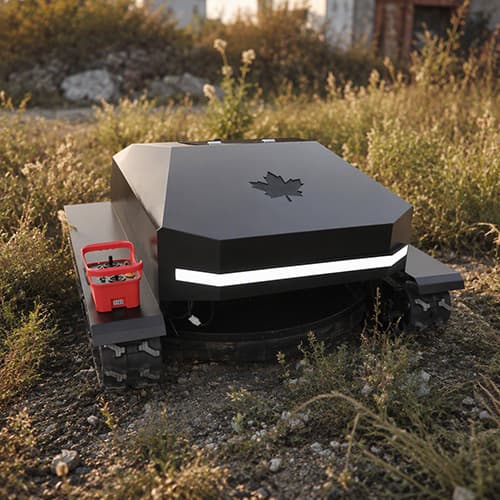
3. Evaluate the Remote Control System
The wireless remote‑control unit forms the operational heart of any RC lawn mower. Impressive engine specs and cutting hardware deliver limited value if joysticks feel unresponsive or operators cannot maintain clear visual contact with the working machine. Commercial purchasers need to assess multiple remote‑system attributes:
Control responsiveness: Predictable, consistent reaction to operator inputs under real‑world field conditions.
Operating range: Treat published range figures as theoretical values; account for jobsite obstacles and visibility constraints.
Ease of use: Intuitive controller layout to shorten operator learning curves.
Signal reliability: Confirm fail‑safe behaviours triggered by signal loss or communication interruptions.
Safety functions: Understand emergency‑stop workflows and integrated protective machine behaviours.
Whenever feasible, request an on‑site practical demonstration. Hands‑on testing uncovers operational nuances impossible to interpret purely from spec sheets. For contractors running equipment daily, thoughtful remote‑control design carries equal weight to raw cutting power.
4. Look Beyond Horsepower: Traction, Stability, and Maneuverability
Engine power is relevant, yet it only represents part of total field performance. Remote‑control mowers frequently operate on difficult ground where surface grip and chassis geometry dominate real‑world results. Traction, inherent stability, undercarriage layout and turning agility collectively define how well hardware copes with demanding sites.
Traction
Drive‑system design, track or tire construction dictate how the unit travels across varied surfaces. Tracked configurations excel in certain tough scenarios; wheeled alternatives fit other operating environments. Neither design universally outperforms the other for every application.
Stability
Stability becomes critical during slope mowing. Analyse center‑of‑gravity layout, chassis construction, official incline ratings and manufacturer operating guidance.
Maneuverability
Professional vegetation management regularly features trees, fencing, drainage infrastructure, narrow gateways and irregular property boundaries. Overall machine footprint plus turning radius govern ease of navigation around these obstacles.
Ground Conditions
Damp turf, soft soil, loose debris and hidden obstructions alter grip and handling. A machine performing flawlessly on one surface may exhibit very different behaviour on alternate ground types.
When comparing models, evaluate the complete drive‑chassis assembly rather than fixating on one isolated technical parameter. Many mixed‑terrain contracting teams also assess robot crawler lawn mower configurations for complex field assignments.
5. Calculate Maintenance Requirements and Total Ownership Costs
Upfront purchase price forms merely one component of full‑lifecycle equipment expense. For commercial operators, routine servicing, consumable spare parts, haulage costs, fuel or electric power consumption and unexpected downtime all shape long‑term equipment value. A lower sticker price does not automatically translate to the most economical total operating expenditure over the machine service life.
Key service‑related items for pre‑purchase enquiry:
Cutting blades and other wear components
Tracks or tires
Belts and drive components, where applicable
Filters, lubricants, and service items
Remote control batteries
Electrical components
Engine or battery‑system maintenance
Cleaning and inspection requirements
Exact service checklists change according to machine architecture and power source. Always verify physical accessibility of core service points; easily‑reached inspection zones simplify regular workshop upkeep. Confirm ready availability of technical manuals, troubleshooting guidance and replacement component stock from your supplier.
| Cost Category | Questions to Ask |
|---|---|
| Initial purchase | What is included in the quoted price? |
| Routine maintenance | What service is required and how often? |
| Wear parts | Which components require periodic replacement? |
| Energy or fuel | What are the expected requirements under typical use? |
| Transportation | What equipment is needed to move the mower between sites? |
| Downtime | How quickly can common problems be diagnosed and repaired? |
| Technical support | What support is available after purchase? |
Conduct ownership‑cost comparisons built around realistic assumptions for your working hours, workload profile and local service pricing.
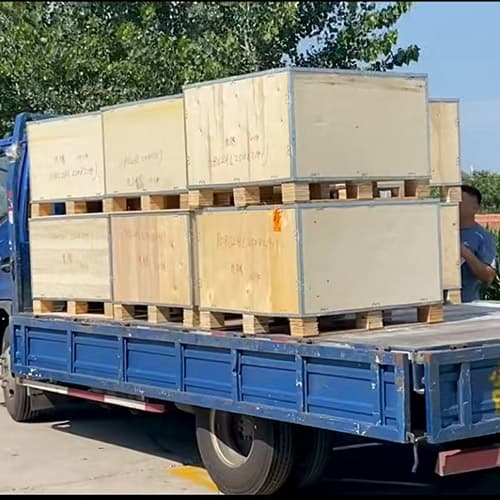
6. Consider Transportation, Storage, and Daily Workflow
Even high‑performing mowers create operational headaches if loading, hauling, storage or pre‑job preparation prove cumbersome. This factor carries extra weight for landscaping contractors travelling across multiple customer sites every workday.
Key practical pre‑purchase questions:
Can the mower fit on your existing trailer or transport vehicle?
Is suitable loading equipment required?
Can the machine pass through the gates and access routes found on your sites?
Is there enough storage space at your workshop or depot?
How easy is it to clean and inspect after use?
Can operators prepare the machine efficiently at the beginning of each job?
Always evaluate the full end‑to‑end workflow: transport → mowing work → post‑job cleaning, inspection and secure storage. For instance, contractors completing multiple roadside assignments per day gain huge value from fast‑loading hardware alongside strong cutting performance. Selecting equipment compatible with your present‑day workflows prevents avoidable operational friction post‑purchase.
7. Choose a Supplier That Understands Professional Applications
A remote‑control lawn mower represents complex technical hardware, making supplier support a critical purchasing consideration. Reliable vendors should clearly communicate intended machine applications, operational boundaries, maintenance routines and available post‑sales assistance.
Important questions for your supplier before placing an order:
What applications is this model designed for?
What are its operating and slope limitations?
Which spare parts are commonly required?
Are operating and maintenance manuals available?
What warranty terms apply?
Is technical assistance available after delivery?
What training or operating guidance is provided?
How are replacement parts ordered?
For businesses building‑out equipment fleets, consistent dependable support proves extremely valuable. Delays obtaining technical documentation or consumable spare‑parts directly disrupt scheduled project delivery. Provide your supplier with detailed background about your real‑world jobsites: terrain profiles, vegetation types, annual working hours, transport constraints and typical workload. This context helps them recommend appropriately‑matched hardware. You can explore our full RC mower lineup and share your project details with KOIVI product specialists to validate model suitability before finalizing buying decisions.
Which Remote Control Lawn Mower Is Right for Your Business?
Once you work through these seven evaluation dimensions, rank priorities aligned to the assignments your business executes most frequently.
For steep slopes and embankments
Prioritize approved slope capability, traction, stability, remote control performance, and operator visibility. Confirm the manufacturer's operating limits before use.
For rough grass and vegetation
Focus on the cutting system, power, cutting height, serviceability, and the machine's suitability for the vegetation you need to manage.
For contractors managing multiple properties
Look at transport, versatility, maintenance, operating costs, and how easily the mower fits alongside your existing equipment.
Perfect equipment selection always ties back to your working environment, budget and operational priorities. Benchmark hardware against genuine project‑site requirements instead of judging purely by marketing‑focused specification headlines. If you want to discuss model selection and your jobsite parameters with our engineering team, you can get connected via WhatsApp.
Frequently Asked Questions
1. Are remote control lawn mowers suitable for professional use?
Yes. Depending on the model and its specifications, remote control lawn mowers can be suitable for landscaping, grounds maintenance, agriculture, roadside vegetation management, and other professional applications.
2. What is the most important factor when buying a remote control mower?
There is no single factor that matters most for every buyer. Terrain suitability is an important starting point, followed by cutting performance, control systems, traction, maintenance, and after‑sales support.
3. Can a remote control lawn mower work on steep slopes?
Some models are specifically designed for slope mowing. However, maximum operating angles and suitable conditions vary by model. Buyers should check the manufacturer's instructions and account for ground conditions, moisture, and direction of travel.
4. Are tracked remote control mowers better than wheeled models?
Not in every situation. Tracks and wheels have different characteristics. The right design depends on terrain, traction requirements, maneuverability, maintenance, and the machine's intended application.
5. How do I estimate the running costs of a remote control lawn mower?
Consider energy or fuel consumption, routine servicing, replacement parts, transportation, and potential downtime. Use your expected working hours and local operating costs to make a realistic comparison.
6. What should I ask a supplier before purchasing?
Ask about the machine's intended applications, technical specifications, operating limitations, warranty, spare parts, maintenance schedule, manuals, and after‑sales support.
7. Can a remote control mower replace all conventional mowing equipment?
Usually, it is better to evaluate it as part of a wider equipment strategy. Walk‑behind mowers, ride‑on mowers, tractors, and remote control mowers each have applications where they may be appropriate.
Make Your Next Mower Purchase a Practical Investment
Buying a remote control lawn mower is not simply about selecting a machine with a powerful engine or a wide cutting deck. It is about finding equipment that fits the terrain, vegetation, working schedule, and service requirements of your business.
By evaluating terrain capability, cutting performance, remote control functions, traction, ownership costs, transportation, and supplier support, you can make a more informed decision and avoid choosing a machine that does not suit your daily work.
For professional landscaping companies, agricultural operators, and land maintenance contractors, the right remote control mower can add valuable flexibility when managing difficult or inaccessible areas.
KOIVI remote control lawn mowers offer an option for professionals exploring specialized mowing equipment for challenging environments. Before purchasing, compare the specifications of the relevant model with your actual operating conditions and discuss your application with the supplier.
The best mower is not necessarily the biggest or most powerful. It is the one that helps you complete your work reliably, practically, and efficiently.