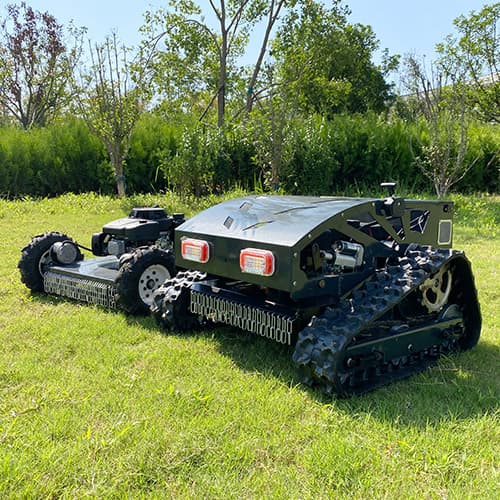

1. Understanding the Two Types of Equipment
Overgrown vegetation creates tough work for landscapers, grounds‑maintenance and roadside contractors. Tall grass, dense weeds and woody saplings quickly raise job difficulty. A brush cutter delivers precise trimming around obstacles, while tracked remote control mower units handle larger overgrown zones especially on uneven, hard‑to‑reach terrain. Your best choice depends on vegetation density, terrain, work scale, operator safety and total project cost.
What Is a Remote Control Mower?
A remote‑control mower runs via handheld wireless remote, available in wheeled or tracked configurations for grass, rough vegetation or certified slope work. Unlike walk‑behind mowers, operators do not need to follow directly behind the machine, ideal for difficult‑access sites.
Roadside embankments and drainage banks
Large areas of tall grass and weeds
Uneven land and rough ground
Commercial grounds & solar farm boundaries
Agricultural and industrial land management
Cutting and slope performance follow manufacturer specs; not every unit works for heavy brush. Compact options such as the mini tank mower suit constrained‑access overgrown locations.
What Is a Brush Cutter?
A brush cutter is harness‑supported handheld tool using trimmer line or blades for grass, weeds and select brush. It excels in tight spots unreachable by large mowers.
Trimming around trees, fences, posts and signs
Cutting along narrow paths
Small dense‑weed patches and corners
Removing small woody plants with approved attachments
Versatile, yet operators must stay near the cutting head; large dense areas bring significant physical fatigue.
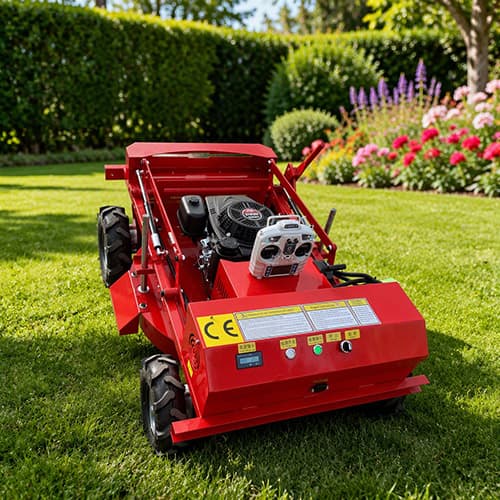
2. Remote Control Mower vs. Brush Cutter: Key Differences
Real‑world value is not about raw horsepower, but how each tool fits your full maintenance workflow.
| Comparison factor | Remote control mower | Brush cutter |
|---|---|---|
| Operating method | Controlled remotely by an operator | Held and guided by the operator |
| Typical working area | Medium‑large areas, terrain‑dependent | Small areas, edges, localized patches |
| Cutting consistency | Consistent coverage for suitable open ground | Depends heavily on operator technique |
| Tall grass and weeds | Within machine capability limits | Works with correct attachments |
| Dense woody brush | Limited by cutting‑system design | Handles small woody growth with proper blade |
| Restricted spaces | Depends on machine width & clearance | Excellent maneuverability in tight zones |
| Slope applications | Only within manufacturer‑approved limits | Possible, requires stable operator footing |
| Operator workload | Reduces manual physical labour | Continuous manual physical handling |
| Precision trimming | Needs follow‑up trimming near obstacles | Perfect for targeted trimming work |
| Best role | Main area‑based mowing jobs | Detail trimming & localized clearing |
Neither tool universally superior. Remote‑control mowers suit repeatable large‑area work; brush cutters are for precision spot‑clearing. Many contractors also assess robot crawler lawn mower for mixed‑terrain overgrown assignments.
3. Which Machine Handles Overgrown Vegetation Better?
Vegetation performance depends on stem thickness, density, moisture and hidden debris — grass height alone is not enough to decide equipment.
Tall Grass and Widespread Weeds
On open sites, qualified remote‑control mowers beat manual brush‑cutter clearing, cutting repetitive physical work. Always inspect for hidden stones, branches and wires before mowing. Brush cutters remain necessary for narrow patches inaccessible to mowers.
Dense Weeds and Mixed Vegetation
Remote‑control mowers handle large zones of moderate‑density growth. Brush cutters work better for localized tough‑stemmed plants. Match your hardware specs to real‑world plant conditions.
Thick Brush and Young Woody Plants
Brush cutters with approved blades can clear small‑diameter woody growth; larger brush requires mulchers or dedicated clearing gear. Remote‑control mowers are not forestry‑grade clearing machines. Pre‑remove heavy woody debris before regular mowing cycles.
4. Terrain and Accessibility: Where the Difference Becomes Clear
Flat and Open Ground
Both tools work on flat ground. Remote‑control mowers deliver higher efficiency for large recurring contracts; brush cutters are better for scattered small patches.
Slopes and Embankments
Slope‑rated remote‑control mowers let operators stay off inclines. Still: follow official gradient ratings, watch for wet or slippery ground. Brush cutters are usable only with secure operator footing. Neither tool should be used without proper risk assessment. The British Association of Landscape Industries warns of traction loss, overturning and flying‑debris hazards on slopes.
Narrow Spaces and Obstacles
Brush cutters dominate trimming around posts, trees and drainage covers. Remote‑control mowers are limited by body width; most projects benefit from combining both types of equipment.
5. Labor Productivity and Total Operating Cost
Purchase cost is only one factor. Brush cutters cost less upfront but consume lots of labour for big clearing jobs. Remote‑control mowers carry higher initial investment plus transport, servicing and operator‑training overhead.
Labour hours & per‑hour coverage under real‑world jobsite conditions
Amount of follow‑up manual trimming work
Maintenance cost, spare‑parts and downtime risk
Inter‑site transport feasibility
Finished work quality meeting contract standards
Calculate total cost for a complete job instead of comparing sticker prices only. Remote‑control mowers make sense for repeated large‑area assignments; brush cutters excel for sporadic obstacle trimming.
6. Safety: Consider More Than Operator Position
Remote‑control mowers change operator location but still throw debris and present slope‑stability risks. Brush‑cutter operators work very close to spinning cutting heads, facing blade‑strike, noise and vibration hazards.
Inspect site for rocks, wire and hidden hazards before starting
Check guards and cutting attachments for good condition
Use required PPE, follow official machine manuals
Keep bystanders outside hazard exclusion zones
Evaluate slope, moisture, visibility and fire‑prevention rules
Stop work once conditions go past safe operating limits
UC Weed Research Center and OSHA note debris impact, terrain and fire risks for both classes of vegetation‑cutting gear. Good equipment supplements — but cannot replace — site assessment and operator training.
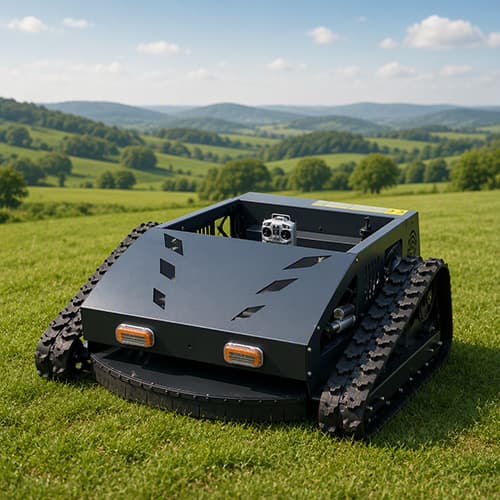
7. Can Remote Control Mowers and Brush Cutters Work Together?
Most professional workflows achieve best results combining both tools rather than choosing one exclusively.
Site inspection: map vegetation, slopes, access restrictions and hazards
Pre‑clear large branches, stones and woody obstacles
Use remote‑control mower for eligible open zones
Deploy brush cutter for edges, fences and unreachable corners
Final inspection of cutting quality and leftover hazards
This mixed‑fleet approach cuts manual workload without sacrificing trimming precision. You can explore our full RC mower lineup when building your vegetation‑management toolset.
8. What Should You Check Before Buying a Remote Control Mower?
Cutting‑system suitability for your local vegetation
Approved maximum slope and wet‑surface performance limits
Traction, ground‑clearance for your typical terrain
Machine dimensions matching site gates & narrow passages
Real‑world working capacity under dense vegetation
Spare‑parts availability and technical‑support resources
Transport & storage compatibility with your existing setup
Total‑cost‑of‑ownership against expected job volume
KOIVI remote‑control lawn mowers are for professional‑grade tough‑terrain vegetation work. Always cross‑check specs to your jobsite realities. Discuss project needs with KOIVI specialists: get connected via WhatsApp.
Frequently Asked Questions
1. Is a remote control mower better than a brush cutter?
Neither is universally better. Remote‑control mowers suit large eligible‑vegetation zones; brush cutters are for precision trimming, narrow spaces and select tough plant growth.
2. Can a remote control mower cut very tall grass?
Some models handle tall grass subject to cutting‑capacity, density and ground conditions. Inspect site first. Extremely woody growth requires pre‑clearing.
3. Can a brush cutter remove thick brush?
Handles small woody plants with correct blades. Larger brush needs dedicated clearing machinery.
4. Which machine is better for steep slopes?
Slope‑approved remote‑control mowers reduce operator‑on‑slope exposure. Brush cutters work only with secure footing. Final choice depends on machine specs, surface and risk assessment.
5. Does a remote control mower eliminate manual trimming?
No. Fence‑lines, corners and obstacles almost always need follow‑up trimming with handheld tools.
6. Which option is more economical for professional contractors?
Depends on job size, vegetation, frequency, labour rates and maintenance. Compare full‑job total costs instead of unit price alone.
7. What safety equipment is needed when using a brush cutter?
Eye‑face protection, hearing‑protection, gloves, proper footwear and protective clothing. Follow manufacturer and local‑regulatory guidance.
Conclusion: Choose Equipment Based on the Job, Not Just the Vegetation
Remote‑control mowers and brush cutters fulfil distinct roles in commercial vegetation management. Brush cutters deliver precision for confined‑space trimming; properly‑selected remote‑control mowers handle large‑area work and certain difficult‑terrain assignments.
For contractors, the optimal strategy is often mixing both types of hardware. Match your equipment selection to real‑world jobsite vegetation, terrain, safety and full‑lifecycle operating costs. Clarify your biggest operational pain‑points before comparing machine specifications for smarter purchasing decisions.